What the Maltese Cross Means in Firefighter Jewelry

Among the many symbols that represent courage and dedication in the firefighting community the Maltese Cross stands as one of the most recognized and revered. It is more than an emblem seen on uniforms or fire trucks. For many firefighters and their families it is a badge of honor that carries centuries of history. When crafted into jewelry the Maltese Cross takes on an even more personal meaning. It becomes a wearable reminder of sacrifice brotherhood and service.

In this article we will explore where the Maltese Cross comes from how it became tied to firefighting what it symbolizes today and why it is such a popular design in firefighter jewelry. We will also look into how jewelers interpret the cross in different metals and styles and how it connects to the identity and pride of those who wear it.

The Historical Origins of the Maltese Cross

The story of the Maltese Cross begins long before the existence of modern firefighting. Its origins date back to the 11th century during the Crusades. At that time a group known as the Knights Hospitaller later called the Knights of Malta adopted a distinctive cross as their emblem. The knights were both warriors and caregivers providing aid to pilgrims in the Holy Land and defending territories from attack.
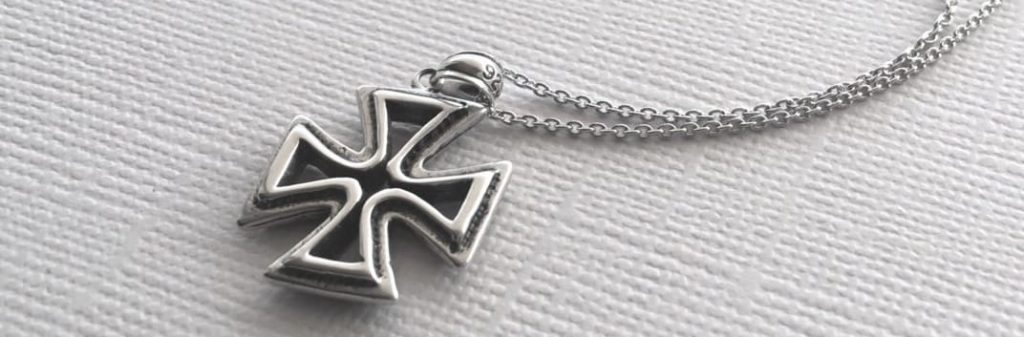
The eight points of the Maltese Cross represented the knights’ vows. These vows were commitments to live with loyalty piety generosity bravery honor mercy respect for the church and to fight for the faith. Over time the cross also came to represent the eight obligations or aspirations of the knights which included qualities like truthfulness and perseverance.

The shape itself is distinctive. Each arm of the cross tapers outward and ends in two points creating the appearance of four V shaped arrowheads meeting at the center. This sharp angular form made it instantly recognizable on flags armor and seals.

The Connection Between the Maltese Cross and Firefighting

The link between the Maltese Cross and firefighting has its roots in the Knights Hospitaller’s experience with fire in battle. Historical accounts describe battles where the knights faced the use of fire as a weapon particularly during the siege of a city where enemies hurled glass bombs of flammable liquid or used fire to break defenses. The knights risked their lives to rescue fellow soldiers and civilians from burning structures often sustaining severe burns themselves.

These acts of bravery and willingness to face flames to save others became part of the Maltese Cross’s legacy. Centuries later organized firefighting services adopted the Maltese Cross as a symbol of similar courage. Firefighters too willingly enter dangerous situations involving flames smoke and collapse to protect lives and property.

By the 19th century the Maltese Cross had been widely adopted in the United States and other countries as a mark of firefighter service. It appeared on badges helmets insignias and official seals. Today many fire departments still use it as their primary emblem and it is deeply embedded in firefighting culture.

Symbolism in the Firefighting Context

When worn by firefighters the Maltese Cross has layers of meaning that go beyond its medieval origins. It symbolizes protection and the willingness to sacrifice for others. The eight points can be interpreted as representing firefighter virtues such as loyalty courage honor and dedication to duty.

Some fire departments provide their own modern interpretations of the eight points. These may include:

  • Observing the rules of firefighting service
  • Maintaining discipline
  • Respecting others
  • Persevering through adversity
  • Keeping oneself physically and mentally strong
  • Striving for excellence in skill and knowledge
  • Maintaining honor in all duties
  • Offering help to those in need

The Maltese Cross also serves as a visual reminder of the unity among firefighters. Regardless of rank or location the emblem signals that the wearer is part of a global fraternity of people who put themselves in harm’s way for the public good.

The Maltese Cross in Jewelry Design

In jewelry the Maltese Cross is often adapted to suit personal tastes and to commemorate individual service. Designs range from plain polished metal to ornate versions with gemstones enamel or intricate engraving.

Materials commonly used:

  • Gold for formal awards and special presentations often in 10k 14k or 18k alloys
  • Silver for everyday wear or for a more understated look
  • Stainless steel or titanium for durability and affordability
  • Platinum for high end heirloom pieces

Design features:

  • Centerpieces featuring a firefighter’s badge number or initials
  • Inlays of department colors often using enamel
  • Gemstones such as rubies or garnets symbolizing the color of fire
  • Combination designs that incorporate fire helmets axes or hoses alongside the cross

Personal and Emotional Value

For active firefighters Maltese Cross jewelry can be a personal statement of pride in their career. For retired firefighters it may serve as a cherished reminder of years of service. Families also wear Maltese Cross pendants bracelets or rings to honor their loved ones in the fire service.

Many such pieces are given as gifts during major milestones. These can include academy graduation promotions anniversaries of service or retirement ceremonies. In cases where a firefighter has lost their life in the line of duty the Maltese Cross in jewelry becomes a deeply emotional memorial symbol often worn daily by family members.

Commemorative and Fundraising Uses

Some organizations and fire departments use Maltese Cross jewelry in fundraising efforts for firefighter charities. Limited edition pins pendants or cufflinks may be sold to raise money for injured firefighters or for the families of those who have died in service. The universal recognition of the Maltese Cross helps make these items desirable even among people who are not directly involved in firefighting but who want to support the cause.

Customization Trends in Firefighter Jewelry

Modern jewelers often work with advanced techniques to customize Maltese Cross pieces. Laser engraving can precisely add names dates and service numbers. CAD design allows for personalized adjustments to the cross shape size and proportions while maintaining the symbolic integrity.

Combination pieces are also popular. Some designs incorporate the Maltese Cross into dog tag style pendants favored by younger firefighters. Others integrate it into watch faces keychains or belt buckles all of which blend function with symbolism.

The Maltese Cross as a Legacy Item

Firefighters often pass their Maltese Cross jewelry down through generations. A pendant given by a retired firefighter to a child or grandchild can carry both family and professional history. These legacy items are treated as heirlooms valued for their emotional connection rather than just their material worth.

Cultural and International Perspectives

While the Maltese Cross is most strongly associated with Western firefighting traditions it also appears in other cultures. In some European countries firefighting services trace their history directly to military or knightly orders that used the cross centuries ago. In other countries the emblem has been adopted from international firefighting organizations and has the same universal meaning of bravery and service.

Why the Symbol Endures

Symbols endure because they connect people across time and place. The Maltese Cross has survived nearly a thousand years because it embodies values that remain relevant. In the context of firefighting it represents the courage to face danger the skill to overcome it and the compassion to do it for the sake of others.

When transformed into jewelry these qualities are literally kept close to the heart. Whether worn around the neck on a wrist or as part of a ring the Maltese Cross continues to inspire pride and respect.

How to Choose the Right Maltese Cross Jewelry

For those interested in owning a piece of Maltese Cross jewelry the choice depends on personal connection and purpose.

  1. Decide the meaning – Is it for active service commemoration retirement or memorial?
  2. Select the metal – Choose based on budget durability and personal style.
  3. Consider customization – Names badge numbers and dates add meaning.
  4. Check craftsmanship – Ensure the shape is proportionally correct and details are sharp.
  5. Think about wearability – Everyday pieces should be sturdy and resistant to tarnish while ceremonial pieces can be more delicate.

The Role of Jewelers in Preserving the Symbol

Jewelers who create Maltese Cross pieces are not just producing decorative items. They are helping to preserve and share a symbol that carries real emotional and historical weight. For many clients especially those within firefighting families the jeweler’s work becomes part of a deeply personal story.

Conclusion

The Maltese Cross is more than just an attractive shape. In firefighter jewelry it is a profound emblem of courage service and sacrifice. Its origins with the Knights Hospitaller link it to a tradition of risking one’s life for others. Its adoption by the fire service reinforces its meaning in the modern world. When crafted into jewelry it becomes a lasting reminder of those values and a personal tribute to those who live by them.

From the firehouse to the jewelry workshop the Maltese Cross continues to bridge history and personal identity. It is worn not only for its beauty but for the ideals it represents. In a world where many symbols fade over time the Maltese Cross remains timeless both as an emblem of firefighting and as a cherished piece of jewelry.
Buying Diamonds in Michigan: What Really Matters Before You Choose

Buying a diamond in Michigan can be an exciting experience, especially if the purchase is tied to a meaningful moment such as an engagement, anniversary or family milestone. At the same time, diamonds are complex gemstones and without the right background knowledge it is easy to feel overwhelmed or misled. Prices vary widely, quality is not always obvious at first glance, and not all diamonds are created equal.

Whether you are shopping in a local jewelry store or browsing online, understanding the fundamentals will help you make a confident decision. A well chosen diamond balances beauty, durability and value rather than chasing a single metric like size alone.

Understanding Diamond Carat Weight Beyond Size

Carat weight is often the first thing buyers notice, but it is also one of the most misunderstood aspects of a diamond. While carat refers to weight rather than physical dimensions, many shoppers assume that a higher carat automatically means a better diamond. In reality, two diamonds with the same carat weight can look noticeably different depending on how they are cut.

A well cut diamond can appear larger and brighter than a heavier stone with poor proportions. Instead of focusing only on hitting a round number such as one carat, it is often smarter to consider how the diamond looks on the hand and how efficiently it reflects light.

GIA’s explanation of carat weight places strong emphasis on the historical origin of the term itself. The word carat comes from carob seeds, which were used in ancient times as a natural reference for weighing gemstones. Early gem traders relied on these seeds because they were believed to be remarkably consistent in weight. Before standardized scales existed, merchants needed a practical way to measure small, valuable objects like diamonds, and carob seeds became a widely accepted solution across trading regions.

While modern gemology no longer relies on seeds, the legacy of this system remains embedded in how diamonds are measured today. One carat is now precisely defined as 0.2 grams, ensuring consistency and fairness in global diamond trading. GIA highlights this history to help buyers understand that carat weight refers strictly to mass, not to visual size or beauty. This distinction is important because two diamonds with the same carat weight can appear very different depending on their cut proportions and shape. Understanding this historical and technical context helps consumers make more informed decisions rather than equating carat weight alone with overall diamond quality.

Diamond Shape and Why It Affects Appearance

Diamond shape plays a major role in how a diamond looks once it is set in jewelry. Shape refers to the outline of the diamond when viewed from above, not to be confused with cut quality, which describes how well the diamond’s angles and proportions are executed. Even diamonds with identical carat weight can appear very different in size and presence depending on their shape. This is one of the first visual decisions buyers should think about because shape strongly influences style, personality, and overall impression.

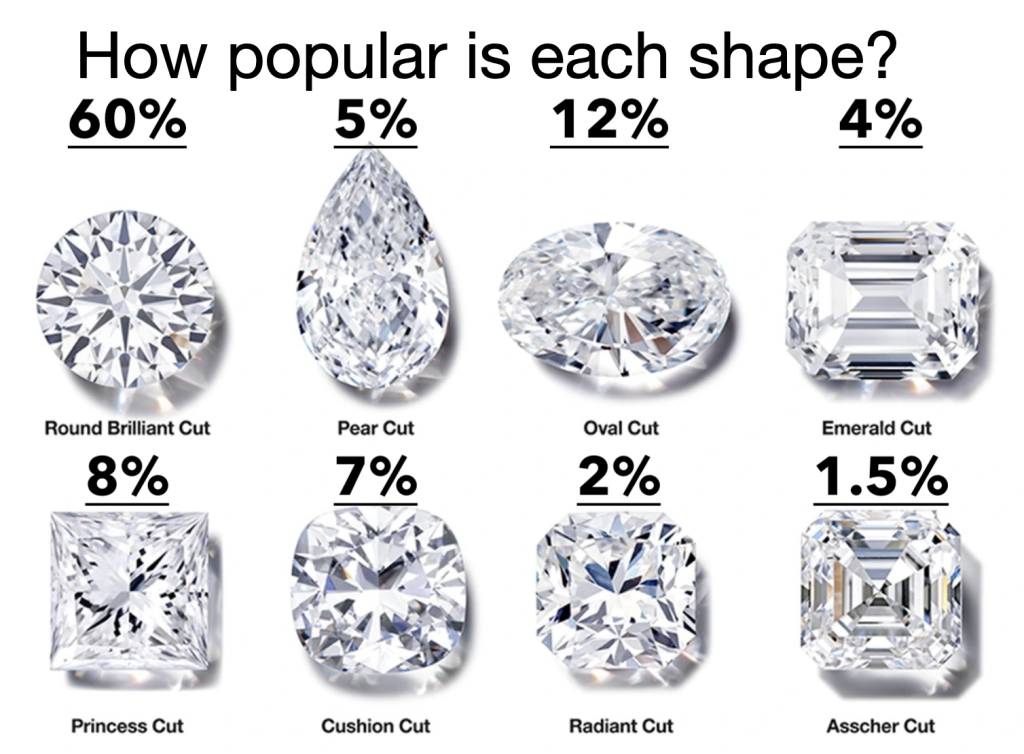
Round diamonds are the most popular shape worldwide, largely because they are designed to maximize brilliance and sparkle. Their symmetrical outline works well with nearly every ring style and setting. Fancy shapes such as oval, pear, marquise, and emerald cut diamonds create a very different visual effect. Elongated shapes often appear larger than their actual carat weight and can make fingers look longer and slimmer, which is one reason they have gained popularity in recent years.

Popularity of diamond shapes for engagement rings showing percentage share for round brilliant, oval, princess, cushion, pear, emerald, radiant and asscher cuts

Different shapes also interact with light in unique ways. Brilliant style shapes like round, oval, and cushion diamonds are cut with many facets that enhance sparkle and fire. Step cut shapes such as emerald and Asscher cuts rely more on clean lines, symmetry, and clarity rather than intense brilliance. Because of this, inclusions and color can be more visible in step cut diamonds, making shape an important consideration when balancing beauty and budget.

Finger size, ring setting, and personal taste should all be taken into account when choosing a diamond shape. A shape that looks stunning loose may feel very different once set in a ring or worn daily. This is why it helps to study visual comparisons and real examples before making a decision. Resources such as GIA’s guide on diamond shapes provide useful overviews of how each shape behaves visually and what characteristics buyers should expect from them.

Ultimately, there is no universally best diamond shape. The right choice depends on the look you want, how you plan to wear the diamond and which qualities matter most to you. Some buyers prioritize sparkle, others prefer elegance or a bold silhouette. Understanding how shape affects appearance allows you to choose a diamond that feels intentional rather than accidental and that confidence shows the moment the diamond is worn.

Cut Quality and Light Performance

Cut quality is the single most important factor in determining how a diamond looks once it is set and worn. While carat weight, color and clarity describe a diamond’s physical attributes, cut controls how light enters, reflects and exits the stone. A well cut diamond will appear bright, lively and full of contrast, even if its color or clarity grades are modest. A poorly cut diamond, on the other hand, can look dull and lifeless despite impressive specifications on paper.

Light performance is directly tied to a diamond’s proportions and facet alignment. When angles are properly balanced, light entering the diamond reflects internally and returns to the viewer’s eye. If the pavilion is too shallow or too deep, light leaks through the bottom or sides instead of reflecting back. This leakage reduces brightness and makes the diamond appear darker in the center or around the edges, an effect that is easy to spot once you know what to look for.

Different diamond shapes handle light in different ways, which is why cut standards vary across shapes. Round brilliant diamonds are engineered specifically for maximum light return and are therefore the most forgiving when it comes to performance. Fancy shapes such as oval, pear, and cushion cuts require more careful evaluation because they do not follow a single ideal proportion model. Small variations in symmetry or angle placement can have a noticeable impact on how these diamonds perform in real world lighting. That’s why GIA issues a Cut grade only for round cut diamonds while IGI’s fancy shape cut grading system also issues cut grades for all other cut grades.

Understanding cut quality also helps buyers avoid relying solely on grading labels. Terms like Excellent or Very Good can cover a wide range of actual performance outcomes. Two diamonds with the same cut grade may look noticeably different when viewed side by side. Evaluating light behavior, balance and overall visual appeal allows buyers to make decisions based on how a diamond truly performs rather than how it is described on a report.

Clarity and What Inclusions Really Mean

Clarity describes the presence of natural characteristics inside or on the surface of a diamond, commonly referred to as inclusions and blemishes. These features form as the diamond grows deep underground and are a normal part of a diamond’s natural history. No two diamonds share the exact same inclusion pattern, which makes every stone unique. Clarity grading evaluates how visible these characteristics are under magnification, not whether a diamond is flawless to the naked eye.

What often gets overlooked is that most inclusions have little to no impact on a diamond’s appearance once it is set and viewed in everyday conditions. Many diamonds graded in the VS or SI range appear completely clean without magnification. The location, size and type of inclusion matter far more than the clarity grade itself. A small inclusion near the edge of the diamond can often be hidden by a prong, while a similar inclusion under the table may be more noticeable.

Understanding clarity helps buyers avoid paying for characteristics they cannot see. Higher clarity grades come at a premium, yet the visual difference between a VVS diamond and a well chosen SI diamond is often invisible in real life. Evaluating clarity with the goal of eye cleanliness rather than perfection allows buyers to allocate their budget more effectively, often upgrading cut quality or carat size without sacrificing visible beauty.

Diamond Color and Visual Impact

Diamond color refers to the presence of subtle warm tones within a stone, typically yellow or brown, that affect how bright and white it appears. Most diamonds used in engagement rings fall within a narrow range on the color scale, yet small differences can influence visual impact depending on cut, size and setting. Color grading is done under controlled conditions, but real world viewing is far less clinical, which is why color perception often differs from what a grading report suggests.

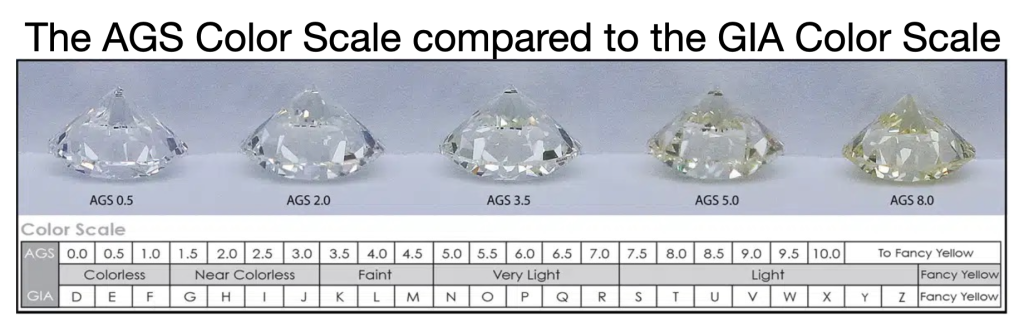
In everyday wear, a well cut diamond can mask color remarkably well. Strong light return and contrast create brightness that draws the eye away from faint warmth, especially in smaller stones. This is why two diamonds with the same color grade can look noticeably different in practice. Cut quality often plays a larger role in perceived whiteness than the letter grade alone, making color a factor that should be evaluated in context rather than isolation. The image below is an example from the AGS diamond color scale which shows the progression of color from D to Z:

AGS vs GIA diamond color scale comparison explained

The choice of metal also affects how diamond color is perceived. Yellow and rose gold settings naturally reflect warmth into the stone, making slightly lower color grades appear more harmonious. White gold and platinum provide a cooler backdrop, which can emphasize warmth in larger diamonds but also enhance contrast and brilliance in well cut stones. Understanding this interaction allows buyers to choose a color grade that complements the setting rather than fighting against it.

Diamond size influences color visibility as well. As carat weight increases, the body color becomes easier to detect, particularly in step cuts and elongated shapes that offer larger open facets. Round brilliant diamonds tend to hide color more effectively due to their faceting style, while emerald and Asscher cuts reveal color more readily. This makes shape an important consideration when selecting an optimal color range.

Ultimately, diamond color is about balance rather than chasing the highest grade. Many diamonds in the near colorless range appear perfectly white to the naked eye and offer exceptional value compared to higher graded stones. Prioritizing visual performance over laboratory perfection helps buyers select diamonds that look beautiful in real life, not just impressive on paper.

Buying Diamonds in Michigan With Confidence

Michigan offers access to both local jewelers and online retailers, each with their own advantages. Local stores allow in person viewing and personal service, while online sellers often provide broader selection and competitive pricing. Regardless of where you shop, insist on a reputable grading report from a respected laboratory and take the time to compare multiple options.

If you want a deeper and more practical breakdown of how professionals evaluate diamonds, this guide by Your Diamond Teacher offers a clear and structured approach that many first time buyers find helpful.

Final Thoughts Before You Buy

Buying a diamond should feel rewarding, not stressful. When you understand how carat weight, cut quality, clarity color, and shape work together, you gain the ability to judge diamonds on their true merits rather than marketing claims. With patience and informed decision making, it is possible to find a diamond that delivers lasting beauty and genuine value.

Firemensmemorial.org believes that craftsmanship, knowledge, and thoughtful selection matter. Diamonds are more than luxury items. They are symbols meant to last, and choosing wisely makes all the difference.

Why Buy Diamonds Online

Many people are surprised to learn that the primary reason buyers choose to purchase diamonds online is cost. This difference is not accidental. Traditional brick and mortar jewelry stores must cover expenses such as rent, staff, insurance, security systems, and inventory held on site. Online diamond sellers operate very differently. Without the burden of a physical storefront, they are often able to offer the same diamonds at noticeably lower prices.

That price advantage can be meaningful, especially for buyers who want a higher quality stone within a fixed budget. A difference of just a few hundred dollars can translate into better cut quality, higher clarity, or a larger carat size. For many buyers, that tradeoff alone makes online shopping appealing.

That said, price should never be the only factor. When a diamond appears dramatically cheaper than comparable stones elsewhere, caution is required. Reputable sellers price diamonds competitively, but extreme discounts can sometimes signal misleading grading, poor cut quality, or incomplete information. A careful buyer learns to distinguish between fair market pricing and offers that sound too good to be true.

How to Buy Diamonds Online Safely and Confidently

Another major benefit of buying diamonds online is selection. Local stores are limited by display space and inventory costs. Online platforms can list tens of thousands of diamonds sourced from cutters and wholesalers across the world. This allows buyers to compare stones with very specific characteristics instead of settling for what happens to be in stock locally.

This broader selection also empowers buyers to learn. When browsing online, it becomes easier to see how cut proportions affect appearance, how small changes in clarity influence price, and how color interacts with different metals. Many buyers discover that they do not need to compromise nearly as much as they initially thought.

One of the most important steps when shopping online is preparation. Before making any decision, it is essential to research slowly and methodically. Begin by understanding the fundamentals of diamond grading. Look at stones with similar specifications and compare prices across multiple platforms. Avoid purchasing the first diamond that catches your eye without context.

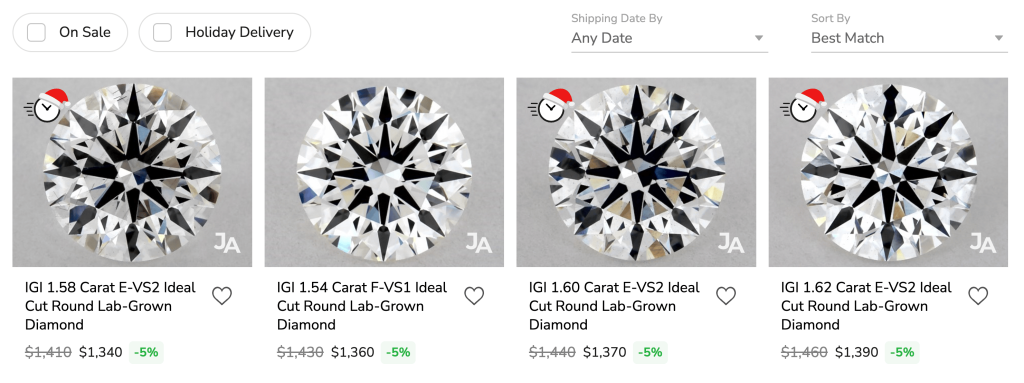
If you ever want to go the route of buying a lab-grown diamond, it is also important that you understand how IGI grades lab-grown diamonds. IGI is different from GIA, it’s another grading lab and it’s the one we recommend for lab-grown diamonds. For natural diamonds GIA remains the gold standard. The main difference lies in how IGI shows inclusions on their grading reports.

lab-grown IGI diamond on James Allen

Comparing multiple sellers is one of the strongest advantages of online shopping. Prices are transparent and competition is visible. With a few hours of research, buyers can identify fair pricing ranges and spot inconsistencies. This level of comparison is often impossible in a traditional store setting.

Equally important is evaluating the credibility of the seller. Reputable online diamond dealers clearly list their credentials, grading reports, and return policies. Buyers should confirm that diamonds are graded by recognized laboratories and that full documentation is provided. Affiliations with established jewelry organizations can add an additional layer of trust, although they should not replace independent evaluation.

Some online transactions also involve escrow services, particularly in private or high value sales. In an escrow arrangement, the seller sends the diamond to a neutral third party. The buyer submits payment to the escrow service rather than directly to the seller. The diamond is then forwarded to the buyer for inspection. Once the buyer confirms satisfaction or completes an independent appraisal, the funds are released to the seller. This process reduces risk for both sides and can provide peace of mind in certain situations.

Despite these advantages, buying diamonds online is not ideal for everyone. Some buyers value the tactile experience of seeing a diamond in person before making a decision. Others feel more comfortable speaking face to face with a jeweler. These preferences are valid and reflect different buying styles rather than right or wrong choices.

What matters most is alignment with the buyer’s comfort level. Online diamond shopping rewards patience, curiosity, and attention to detail. For those willing to invest time into research, it can offer exceptional value and transparency. For others, a physical store may still feel like the better fit.

In the end, the best buying experience is the one that leaves the buyer confident and informed. Whether online or in person, understanding the fundamentals of diamonds and working with reputable sources is what ultimately protects the investment and ensures long term satisfaction.

Firemensmemorial.org approaches diamond education from that same mindset. We believe that craftsmanship, precision, and informed decision making matter. Just as firemen rely on training and trust in their tools, diamond buyers benefit most when they understand what they are purchasing and why it performs the way it does.